
Types of Air Purifier
Welcome
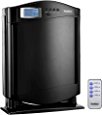 The basic principle of an air purfier is to remove contaminants such as dust particles and VOCs from the air. There are several different methods
used, the most common and popular being to use a HEPA filter to trap particles, other methods include adsorbing pollutants, causing them to react
and breakdown or giving particles a negative charge so they stick to surfaces rather than being suspended in the air. Air purifiers may use one
or more of these methods to clean the air.
Read on for a more detailed guide to each type along with the pros and cons for each.
The basic principle of an air purfier is to remove contaminants such as dust particles and VOCs from the air. There are several different methods
used, the most common and popular being to use a HEPA filter to trap particles, other methods include adsorbing pollutants, causing them to react
and breakdown or giving particles a negative charge so they stick to surfaces rather than being suspended in the air. Air purifiers may use one
or more of these methods to clean the air.
Read on for a more detailed guide to each type along with the pros and cons for each.
Filters
Typiclly made from porous paper or glass fibres, a fan is used to blow air through the filter which then traps the dust particles. The dust particles are trapped in one of three ways, seiving where the particle is too big to fit through the gap, attraction where the particle sticks to a fibre in the filter and impactation where a particle colliods with a fibre and becomes embedded in it. Not all filters are the same, they have different levels of efficiency. For example a HEPA filter must be able to trap 99 percent of particles down to 2.5 microns in size. To learn more about HEPA filters, see our page with everything you need to know about HEPA filters. A downside of filters is that over time they become clogged with dust and must be replaced periodically. Also, they can not remove odours and pollutants such as VOCs.
Activated Carbon
Activated carbon is normally in the form of small black granules and contains millions of tiny pores into which pollutants such as VOCs can be adsorbed. Often, an air purifier will combine a filter to trap particles and activated carbon to remove VOCs and odours.
Photocatalytic oxidation
Usually titanium dioxide (TiO2) is used as a catalyst, activated by UV light from a UV lamp. VOCs then react and breakdown into simplier and safer by products such CO2. This technology is relatively new to air purifiers and is not often seen as a feature. You may be interested to know that titanium dioxide is what is used in sun tan lotion to prevent sun burn.
Ozone Generators
Ozone generators generate a reactive form of Oxygen called O3. The O3 reacts with VOCs and organic mollicules and breaks them down. Because of the reactive nature of the O3 there are concerns over the possible negative health impact of using one in your home. Based on current knowledge, we would not recommended the long term use of an ozone generator. There are some situations where and Ozone generator might be suitable, as an example, ozone generators can be effective at removing damp musty smells following a flood.
Ionizer purifiers
A stream of ions are emitted that give dust partciles a negative charge. This in turn causes the dust to drop out of the air or stick to surfaces. They will produce low levels of ozone and will cause surfaces to become dusty, for these reasons we do not recommend ionizers.